
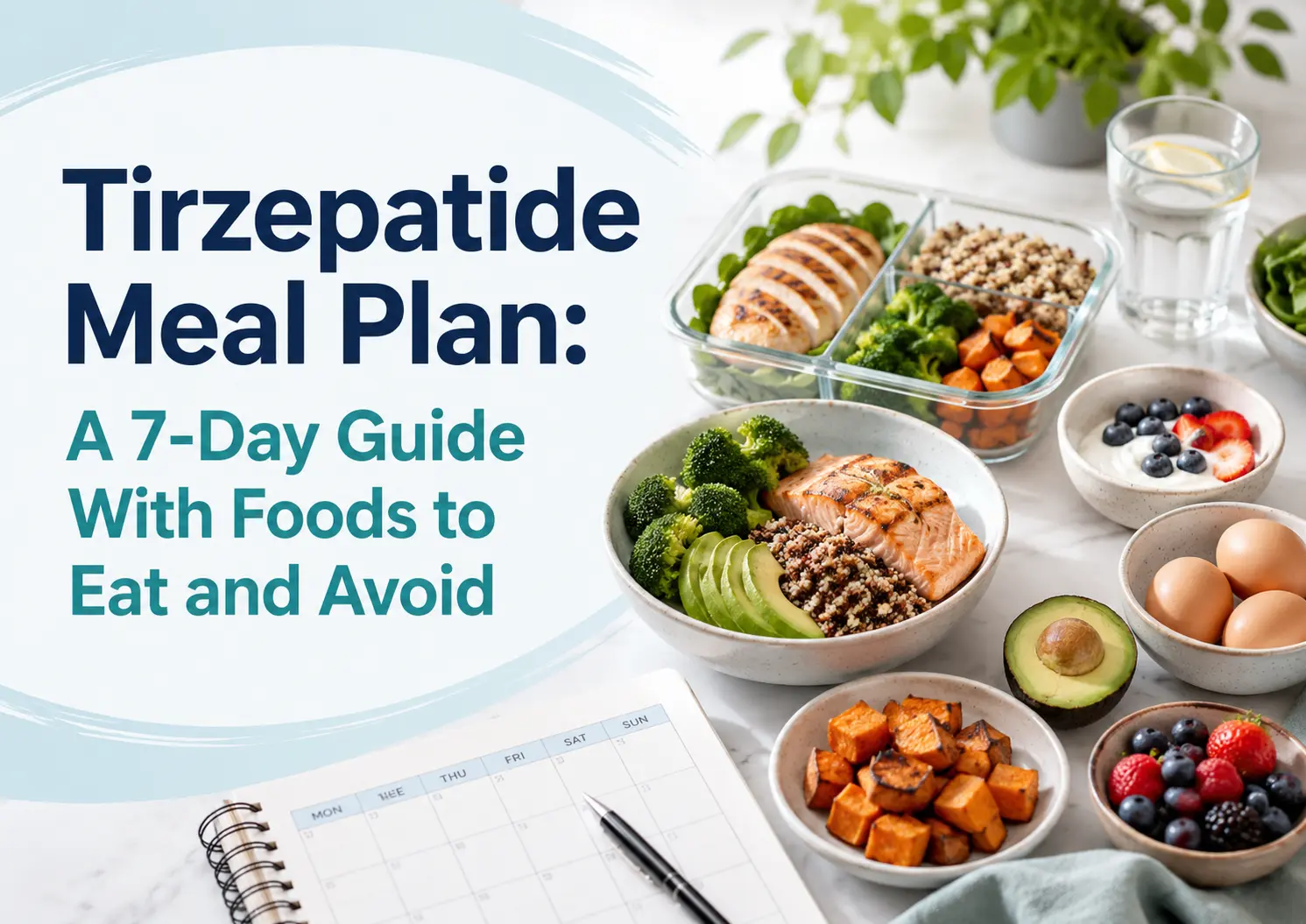
A balanced tirzepatide meal plan should include protein at each meal, fruits or vegetables, moderate portions of fiber-rich carbohydrates, healthy fats, and enough fluids.
Smaller meals are often easier to tolerate because studies show tirzepatide can reduce appetite and slow digestion.
The goal is not to eat as little as possible.
A practical tirzepatide meal plan for weight loss should help you meet your nutritional needs while working with changes in hunger, fullness, and digestion.
There is no single diet everyone must follow while taking tirzepatide.
Your ideal portions and food choices depend on your appetite, activity level, health history, blood sugar needs, treatment goals, and how well you tolerate different meals.
SEE HOW TIRZEPATIDE CAN HELP YOUR WEIGHT LOSS JOURNEY
Tirzepatide Meal Plan at a Glance
A well-balanced meal plan while on tirzepatide generally includes:
- Protein at breakfast, lunch, and dinner
- Fruits or vegetables throughout the day
- Moderate portions of whole grains, beans, or starchy vegetables
- Small amounts of healthy fats
- Water and other unsweetened fluids
- Smaller portions when large meals cause discomfort
- Easy-to-digest options for nausea or low-appetite days
Eat slowly and stop when you feel comfortably satisfied.
Because fullness may arrive sooner than expected, serving yourself a smaller portion first can help prevent nausea, reflux, bloating, or an overly full feeling.
How to Build a Tirzepatide-Friendly Meal
You do not need a complicated diet plan.
A simple meal-building formula can make everyday choices easier:
Start with protein, add vegetables or fruit, include a moderate fiber-rich carbohydrate, and finish with a small amount of healthy fat.
Start With Protein
Protein helps support muscle, recovery, and fullness, especially when your overall food intake decreases.
Protein sources include:
- Chicken or turkey
- Fish or seafood
- Eggs
- Greek yogurt
- Cottage cheese
- Lean beef
- Tofu or tempeh
- Beans or lentils
- Edamame
Try eating the protein portion first if you tend to become full before finishing your meal.
Add Vegetables or Fruit
Vegetables and fruit provide fiber, vitamins, minerals, and fluid.
Possible choices include:
- Berries
- Apples
- Bananas
- Oranges
- Melon
- Spinach
- Broccoli
- Green beans
- Bell peppers
- Carrots
- Cucumbers
- Zucchini
- Tomatoes
Cooked vegetables may be easier to tolerate than a large raw salad when you are experiencing nausea, bloating, or a low appetite.
Include a Fiber-Rich Carbohydrate
Carbohydrates can remain part of a balanced tirzepatide diet plan.
Choose moderate portions of foods such as:
- Oatmeal
- Brown rice
- Quinoa
- Whole-grain bread
- Whole-grain wraps
- Beans
- Lentils
- Potatoes
- Sweet potatoes
- Barley
Pairing carbohydrates with protein may help make meals more balanced and satisfying.
Add a Small Amount of Healthy Fat
Healthy fats contribute flavor and satisfaction, but large servings may feel heavy when digestion is slower.
Options include:
- Avocado
- Olive oil
- Nuts
- Seeds
- Natural peanut or almond butter
- Salmon
Start with a small serving, particularly if greasy or rich foods have been causing nausea or heartburn.
How to Adjust Tirzepatide Meal Plan Portions
The portions below are examples, not personal prescriptions.
Adjust them based on your appetite, body size, activity level, medical needs, and guidance from your healthcare provider.
A balanced starting meal may include:
- 3 to 4 ounces of cooked chicken, fish, turkey, lean meat, or tofu
- ½ cup of cooked rice, quinoa, pasta, beans, or potatoes
- ½ to 1 cup of vegetables
- 1 teaspoon to 1 tablespoon of olive oil, nut butter, seeds, or dressing
A smaller breakfast may include:
- Two eggs
- ¾ cup of Greek yogurt
- ½ cup of cottage cheese
- ½ cup of cooked oatmeal
You may need less food than these examples, especially during the first few weeks of treatment or after a dose adjustment.
Begin with a modest serving and eat more only if you remain hungry.
If appetite is very low, reduce the carbohydrate or vegetable portion before removing the protein entirely.
You can also divide one meal into two smaller eating occasions.
Example 7-Day Tirzepatide Meal Plan
This seven-day tirzepatide meal plan provides breakfast, lunch, dinner, and an optional snack.
The protein amounts are estimates and will vary by ingredient, brand, and serving size.
| Day | Breakfast | Lunch | Dinner | Optional Snack |
| Day 1 | ¾ cup Greek yogurt, berries, chia seeds, and walnuts; approximately 18–22 grams of protein | 3–4 ounces chicken with ½ cup quinoa, cucumber, tomato, and greens; approximately 28–35 grams | 3–4 ounces salmon with sweet potato and broccoli; approximately 25–30 grams | ½ cup cottage cheese with peach; approximately 12–14 grams |
| Day 2 | Two eggs, cooked spinach, and whole-grain toast; approximately 15–18 grams | Turkey and avocado wrap with vegetable soup; approximately 25–30 grams | Chicken and vegetable stir-fry with ½ cup brown rice; approximately 28–35 grams | Apple with 1 tablespoon peanut butter; approximately 4 grams |
| Day 3 | Oatmeal with banana, cinnamon, and Greek yogurt; approximately 15–20 grams | Tuna and white bean salad with whole-grain crackers; approximately 25–30 grams | Turkey meatballs, zucchini, marinara, and a small serving of whole-grain pasta; approximately 25–30 grams | Edamame or a cheese stick; approximately 7–12 grams |
| Day 4 | ½ to ¾ cup cottage cheese with berries and pumpkin seeds; approximately 15–20 grams | Lentil soup with half a turkey or hummus sandwich; approximately 18–25 grams | Grilled chicken with quinoa and green beans; approximately 28–35 grams | Greek yogurt; approximately 12–18 grams |
| Day 5 | Egg and vegetable breakfast wrap; approximately 15–20 grams | Salmon or chickpea salad over mixed greens; approximately 18–28 grams | Lean beef, turkey, or bean chili with avocado; approximately 20–30 grams | Pear with a small handful of almonds; approximately 5–7 grams |
| Day 6 | Small smoothie with Greek yogurt, berries, spinach, and milk; approximately 18–25 grams | Chicken, tofu, or shrimp rice bowl with cooked vegetables; approximately 20–30 grams | Cod or tofu with potatoes and roasted carrots; approximately 20–30 grams | Hard-boiled egg and fruit; approximately 6 grams |
| Day 7 | Whole-grain toast with two eggs and avocado; approximately 15–18 grams | Leftover protein and vegetable bowl with quinoa or brown rice; approximately 20–30 grams | Sheet-pan chicken or tofu with sweet potato, zucchini, and peppers; approximately 22–32 grams | Cottage cheese or a small protein smoothie; approximately 12–20 grams |
Day 1: Protein-Rich Basics
Use a light dressing on the chicken and quinoa bowl, and avoid making the salmon meal overly rich with butter or cream sauces.
Vegetarian swap: Replace chicken with chickpeas or baked tofu and salmon with tempeh or lentil patties.
Low-appetite option: Eat half of the yogurt at breakfast and save the rest for later.
At dinner, try a small serving of salmon with mashed sweet potato.
Day 2: Simple Meals for a Busy Day
Use a modest amount of oil in the stir-fry.
Heavy sauces and fried ingredients may be harder to tolerate when digestion is slower.
Vegetarian swap: Use tofu in the wrap and stir-fry.
Low-appetite option: Have one egg with toast, a cup of soup for lunch, and a small serving of chicken with soft-cooked vegetables for dinner.
Day 3: Add Fiber Gradually
Oats, beans, vegetables, and whole grains contribute fiber, but suddenly increasing your intake may worsen gas or bloating.
Vegetarian swap: Replace tuna with chickpeas and turkey meatballs with lentil or plant-based meatballs.
Low-appetite option: Prepare thinner oatmeal, eat crackers with a small amount of tuna, or have one or two meatballs with cooked zucchini.
Day 4: Use Soup for an Easier Meal
Broth-based soups can be useful when solid meals feel less appealing.
Choose soups containing chicken, turkey, beans, lentils, or vegetables rather than very rich cream-based options.
Dairy-free swap: Choose unsweetened soy yogurt or another protein-rich alternative.
Low-appetite option: Have a small yogurt, one cup of lentil soup, and a few bites of chicken with green beans.
Day 5: Keep Comfort Foods Balanced
Chili can provide protein, vegetables, and fiber in one meal.
Reduce the spice level if tirzepatide has been causing heartburn or stomach discomfort.
Vegetarian swap: Prepare the chili with beans and lentils.
Low-appetite option: Eat half the breakfast wrap, a small serving of salmon or chickpeas, and a cup of mild chili.
Day 6: Choose Convenient Protein Sources
A smoothie can be easier to manage when chewing a full breakfast feels difficult.
Keep the serving moderate because a very large drink may cause uncomfortable fullness.
Dairy-free swap: Use unsweetened soy milk and a protein-rich dairy-free yogurt.
Low-appetite option: Sip a small smoothie gradually and choose snack-sized portions at lunch and dinner.
Day 7: Use Leftovers
Use any remaining cooked protein, grains, and vegetables from the week.
This reduces food waste and makes the plan easier to maintain.
Gluten-free swap: Choose certified gluten-free bread and grains.
Low-appetite option: Eat half a slice of toast with egg, a small bowl of leftovers, and a few bites of chicken or tofu at dinner.
Tirzepatide Meal Plan Grocery List
Adjust this list based on the meals, serving sizes, and dietary substitutions you prefer.
Protein
- Chicken
- Lean ground turkey
- Salmon
- Cod or other fish
- Tuna
- Shrimp
- Eggs
- Greek yogurt
- Cottage cheese
- Tofu or tempeh
- Beans
- Lentils
- Edamame
Vegetables
- Spinach
- Mixed greens
- Broccoli
- Green beans
- Bell peppers
- Carrots
- Cucumbers
- Tomatoes
- Zucchini
- Onions
- Frozen mixed vegetables
Fruit
- Berries
- Apples
- Bananas
- Pears
- Peaches
- Oranges
- Melon
Fiber-Rich Carbohydrates
- Oatmeal
- Quinoa
- Brown rice
- Whole-grain bread
- Whole-grain wraps
- Whole-grain pasta
- Potatoes
- Sweet potatoes
- Whole-grain crackers
Healthy Fats
- Avocado
- Olive oil
- Natural peanut or almond butter
- Walnuts
- Almonds
- Chia seeds
- Pumpkin seeds
Low-Appetite Foods
- Broth-based soups
- Greek yogurt cups
- Cottage cheese
- Eggs
- Tuna packets
- Unsweetened applesauce
- Bananas
- Whole-grain toast
- Frozen fruit for smoothies
How to Meal Prep for the Week
Tirzepatide meal prep does not need to involve cooking every meal in advance.
Preparing a few versatile ingredients can make the week easier.
Try preparing:
- Two proteins, such as baked chicken and boiled eggs
- One or two grains, such as quinoa or brown rice
- A tray of roasted vegetables
- Washed and portioned fruit
- A pot of soup or chili
- Individual yogurt, cottage cheese, or snack servings
Keep convenient backup foods available for low-appetite days.
Eggs, tuna packets, frozen vegetables, soup, yogurt, oatmeal, and smoothie ingredients require little preparation.
Avoid preparing only large, heavy meals.
Smaller portions are easier to reheat and allow you to decide how much you can comfortably eat.
Best Foods to Eat on Tirzepatide
The best foods to eat on tirzepatide provide meaningful nutrition in portions you can tolerate.
Lean Protein
Chicken, turkey, fish, eggs, Greek yogurt, cottage cheese, tofu, beans, and lentils can help support muscle and make meals more satisfying.
Try to distribute protein throughout the day instead of relying on one large serving at dinner.
Fruits and Vegetables
Fruits and vegetables provide fiber, fluid, vitamins, and minerals.
Cooked carrots, green beans, zucchini, or squash may feel gentler than a large raw salad.
Bananas, melon, berries, and unsweetened applesauce may be useful when appetite is low.
Whole Grains and Starchy Vegetables
Oatmeal, quinoa, brown rice, potatoes, sweet potatoes, beans, and whole-grain bread can provide energy and fiber.
Choose moderate portions and pair them with protein.
Healthy Fats
Nuts, seeds, avocado, olive oil, and fish can fit into a balanced meal plan.
Keep servings modest if high-fat meals worsen nausea, reflux, or fullness.
Water-Rich Foods
Soup, melon, cucumbers, berries, yogurt, and cooked vegetables can contribute fluid alongside regular beverages.
Foods to Avoid or Limit on Tirzepatide
No single food is prohibited for everyone taking tirzepatide.
However, certain foods may be more likely to cause discomfort.
Fried or Greasy Foods
French fries, fried chicken, pizza, fast food, and meals covered in heavy sauces may worsen nausea, reflux, bloating, or diarrhea.
Large Meals
Large portions may leave you uncomfortably full for several hours.
Start with less food than you think you need and eat more only if you remain hungry.
Highly Processed Snacks
Cookies, chips, pastries, and candy can displace foods that provide more protein, fiber, vitamins, and minerals.
They do not need to be completely eliminated, but they should not become the foundation of the meal plan.
Sugary Drinks
Soda, sweet tea, energy drinks, and large sweetened coffee beverages provide calories without much fullness.
They may also worsen digestive discomfort for some people.
Very Spicy Foods
Spicy meals may aggravate heartburn, nausea, or stomach discomfort.
Reduce the spice level if you notice a consistent pattern.
Carbonated Drinks
Carbonation may increase burping, bloating, or pressure in the stomach.
Try still water or another noncarbonated drink if sparkling beverages cause discomfort.
Alcohol
Tirzepatide and alcohol can contribute to dehydration, add calories, irritate the stomach, and complicate blood sugar management.
Discuss alcohol use with your healthcare provider, especially if you have diabetes, liver concerns, frequent digestive symptoms, or a history of pancreatitis.
What to Eat on Tirzepatide When You Have Digestive Symptoms
Tirzepatide may cause nausea, diarrhea, vomiting, constipation, abdominal discomfort, indigestion, or reflux.
Symptoms may be more noticeable when beginning treatment or after a dose increase.
| Symptom | Foods That May Be Easier to Tolerate | Foods That May Make It Worse |
| Nausea | Toast, oatmeal, bananas, rice, broth-based soup, plain chicken, yogurt | Fried food, rich sauces, large meals, strong food odors |
| Constipation | Oats, berries, kiwi, vegetables, beans, lentils, chia seeds, fluids | Low-fiber processed foods and inadequate fluid intake |
| Diarrhea | Bananas, rice, toast, potatoes, oatmeal, lean protein, broth | Greasy food, spicy food, alcohol, large amounts of sugar |
| Heartburn | Small meals, oatmeal, lean protein, cooked vegetables | Late meals, fried food, spicy food, tomato-heavy sauces |
| Bloating | Small portions, cooked vegetables, rice, eggs, fish | Carbonated drinks, very large salads, heavy meals |
| Low appetite | Yogurt, eggs, cottage cheese, smoothies, soup, tuna, soft tofu | Large plates, greasy meals, and foods with strong smells |
What to Eat for Nausea on Tirzepatide
Choose small, mild meals rather than forcing yourself to eat a large plate.
Try:
- Dry toast with an egg
- Oatmeal with banana
- Chicken and rice soup
- Greek yogurt
- Crackers with tuna
- A baked potato with cottage cheese
- A small smoothie
Eat slowly and remain upright after meals.
Avoid lying down immediately after eating if you also experience reflux.
What to Eat for Constipation on Tirzepatide
A gradual increase in fiber, adequate fluids, and regular movement may help support bowel regularity.
Try adding:
- Oatmeal
- Berries
- Kiwi
- Pears
- Beans
- Lentils
- Cooked vegetables
- Chia or ground flaxseed
Do not rapidly add large amounts of fiber without also increasing fluids.
That may worsen bloating or constipation.
What to Eat for Diarrhea on Tirzepatide
Choose simple, lower-fat foods such as rice, potatoes, oatmeal, toast, bananas, soup, eggs, or plain chicken.
Continue drinking fluids.
Contact your healthcare provider if diarrhea is persistent, severe, bloody, accompanied by significant pain, or making it difficult to stay hydrated.
How Much Protein Should You Eat on Tirzepatide?
There is no universal protein target for everyone taking tirzepatide.
Your needs depend on:
- Body size
- Age
- Activity level
- Current muscle mass
- Kidney function
- Medical history
- Rate of weight change
- Strength-training habits
A practical approach is to include a recognizable protein source at each meal.
For example:
- Eggs or Greek yogurt at breakfast
- Chicken, tuna, tofu, or beans at lunch
- Fish, lean meat, lentils, or tempeh at dinner
- Cottage cheese, yogurt, edamame, or an egg as a snack
People with kidney disease or another condition that affects protein needs should follow personalized guidance from a medical provider or registered dietitian.
How Much Fiber and Water Do You Need on Tirzepatide?
Fiber supports bowel regularity, fullness, and digestive health.
However, adding too much too quickly may cause gas or bloating.
Increase fiber gradually through foods such as:
- Oats
- Berries
- Beans
- Lentils
- Vegetables
- Seeds
- Whole grains
Drink enough fluid to support the increase.
Instead of relying on one rigid water target, monitor signs of hydration.
Urine should generally be pale yellow, and you should not regularly experience intense thirst, dry mouth, dizziness, or a significant drop in urination.
Vomiting and diarrhea can contribute to dehydration.
Contact your healthcare provider if you cannot keep fluids down or notice signs of dehydration.
Do You Need to Count Calories on Tirzepatide?
Not everyone needs to count calories while taking tirzepatide.
Some people find tracking helpful because it increases awareness of portions and eating patterns.
Others prefer a structured plate method or a protein-first approach.
Even when your appetite is lower, the goal is not to eat as little as possible.
Consistently undereating may make it harder to obtain enough protein, energy, vitamins, and minerals.
Instead of focusing only on calories, ask:
- Am I eating protein throughout the day?
- Am I including fruits or vegetables?
- Am I drinking enough fluids?
- Do I have enough energy for daily activities?
- Am I skipping most of my meals?
- Are digestive symptoms preventing me from eating?
A healthcare provider or registered dietitian can help determine whether you need a personalized calorie target.
What to Eat on Tirzepatide When You Are Not Hungry
You should not force a large meal, but regularly going without food can make it difficult to meet your nutritional needs.
Try a small, nutrient-dense option:
- Greek yogurt with berries
- Cottage cheese and fruit
- One or two eggs with toast
- A small protein smoothie
- Tuna with whole-grain crackers
- Chicken and vegetable soup
- Tofu with rice
- Half a turkey sandwich
- Edamame
- Oatmeal prepared with milk
- Banana with peanut butter
You can also divide one meal into two smaller eating occasions.
Contact your provider if poor appetite consistently prevents you from eating, you are losing strength, or you regularly feel dizzy or unusually tired.
How Many Meals Should You Eat a Day on Tirzepatide?
Some people feel comfortable eating three modest meals.
Others tolerate four to six smaller eating occasions better.
Smaller, more frequent meals may help when:
- You become full after a few bites
- You feel nauseous after eating
- Large meals cause reflux
- You struggle to consume enough protein
- Symptoms are stronger on certain days
Going all day without food and then eating a large dinner may increase nausea or uncomfortable fullness.
Choose a pattern that helps you meet your nutritional needs without forcing food when you are already full.
GET THE MOST OUT OF YOUR TIRZEPATIDE TREATMENT
What Should You Eat After a Tirzepatide Injection?
There is no required meal you must eat immediately before or after a tirzepatide injection.
Continue with foods and meal sizes you normally tolerate.
If you tend to experience nausea around injection day, choose smaller, lower-fat meals such as:
- Eggs and toast
- Oatmeal and banana
- Greek yogurt and berries
- Chicken and rice soup
- Baked fish with potatoes
- A turkey sandwich
- Rice with tofu and cooked vegetables
Avoid eating an unusually large meal before the injection.
A heavy meal may make digestive discomfort more noticeable.
Keep notes on when symptoms appear, what you ate, how large the meal was, and whether your dose recently changed.
This information may help your healthcare provider identify patterns.
When Should You Contact Your Healthcare Provider?
Mild digestive discomfort may improve as your body adjusts, but some symptoms require medical attention.
Contact your healthcare provider if you experience:
- Persistent vomiting or diarrhea
- Difficulty keeping fluids down
- Signs of dehydration
- Severe or worsening abdominal pain
- Abdominal pain that radiates to the back
- Significant dizziness or fainting
- Symptoms of low blood sugar
- Ongoing inability to eat enough
- Severe constipation with pain or vomiting
- Signs of a serious allergic reaction
Severe or persistent abdominal pain may require prompt evaluation.
Do not change your dose or stop a prescribed medication without discussing the situation with your healthcare provider, unless you have been instructed to seek emergency care.
Personalized Tirzepatide Support in West Fargo, ND
A sample tirzepatide meal plan can provide ideas, but it cannot account for your complete health history, symptoms, medications, food preferences, or treatment progress.
Everest Regenerative Medicine provides personalized wellness and weight-management support including tirzepatide in West Fargo, North Dakota.
Our team can help you understand how nutrition, physical activity, monitoring, and treatment decisions may fit together based on your individual needs.
FAQs: Tirzepatide Meal Plan
What is the best meal plan while taking tirzepatide?
The best meal plan while taking tirzepatide includes protein at each meal, fruits or vegetables, moderate portions of fiber-rich carbohydrates, healthy fats, and enough fluids. It should also use portions you can comfortably tolerate.
What foods should I avoid while taking tirzepatide?
Fried foods, greasy meals, large portions, sugary drinks, alcohol, very spicy foods, and heavily processed snacks may be harder to tolerate. Individual triggers vary, so pay attention to foods that repeatedly cause discomfort.
Should I eat if I am not hungry on tirzepatide?
Do not force a large meal, but try to eat a small protein-rich option such as yogurt, eggs, soup, cottage cheese, tuna, tofu, or a smoothie. Contact your provider if low appetite consistently prevents you from eating.
What to Eat to Lose Weight Fast on Tirzepatide?
Focus on lean protein, vegetables, fruit, fiber-rich carbohydrates, and moderate portions of healthy fats. Avoid trying to speed up weight loss by eating too little, since that may make it harder to meet your nutritional needs.
What to Eat on the First Day of Tirzepatide?
Choose familiar, easy-to-digest foods in smaller portions, such as eggs and toast, oatmeal, yogurt, soup, baked fish, rice, or cooked vegetables. Avoid unusually large, greasy, or heavily spiced meals if they tend to upset your stomach.
Why Am I Not Losing Weight on Tirzepatide?
Weight loss may be slower if you are early in treatment, still increasing your dose, eating more calories than expected, retaining water, or experiencing constipation. Sleep, activity, alcohol, other medications, and health conditions may also affect progress.