
If you’re considering retatrutide for weight loss, one of the first questions you’re likely asking is: how long does retatrutide take to work?
The short answer is that many people begin noticing changes in appetite and food cravings within the first one to four weeks.
More noticeable weight loss often develops over the following months as the medication continues working alongside healthy lifestyle habits.
However, everyone’s experience is different.
Some individuals notice reduced hunger almost immediately, while others may not experience significant changes until their dosage increases or they’ve been on treatment for several weeks.
Understanding what to expect can help you stay motivated and avoid becoming discouraged if results don’t happen overnight.
In this guide, we’ll break down the typical retatrutide weight loss timeline, explain how retatrutide works, discuss what clinical studies have shown, and answer common questions about when results typically begin.
SEE IF RETATRUTIDE IS RIGHT FOR YOU
Quick Answer: When Does Retatrutide Start Working?
Retatrutide begins affecting hormone pathways shortly after treatment starts, but noticeable effects usually develop gradually.
Many people report:
- Reduced appetite within 1 to 4 weeks
- Less interest in snacking within the first month
- Improved portion control during the first several weeks
- Measurable weight loss after several weeks to a few months
- Continued weight loss over 6 to 12 months
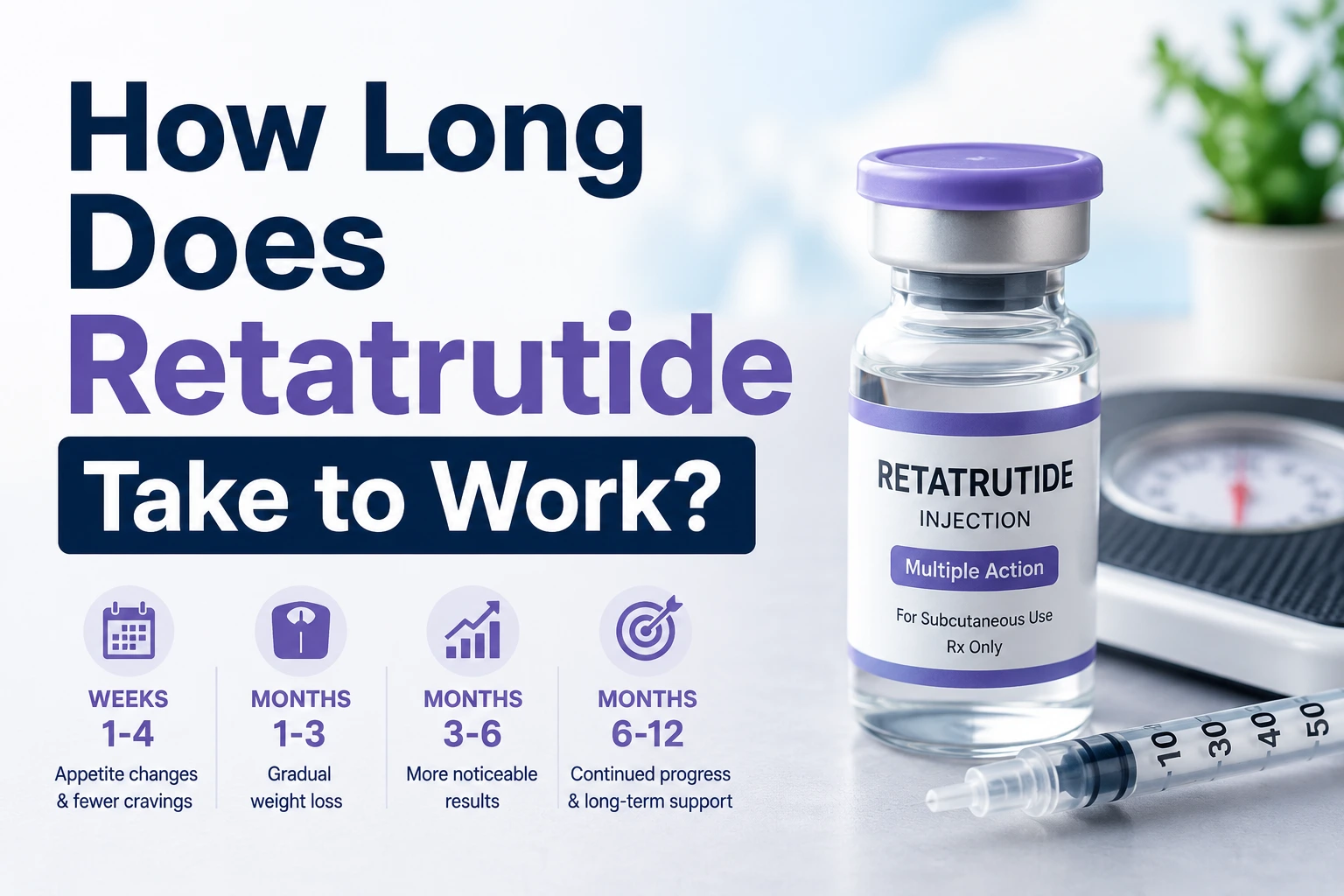
A typical timeline looks like this:
| Timeline | What You May Notice |
| Week 1 | Mild appetite changes and increased fullness |
| Weeks 2-4 | Reduced cravings and smaller portion sizes |
| Months 1-3 | Gradual weight loss becomes noticeable |
| Months 3-6 | More significant weight loss for many individuals |
| Months 6-12 | Continued progress and long-term weight management support |
If you’re wondering how fast retatrutide works, it’s important to remember that appetite suppression often occurs before significant weight loss appears on the scale.
What Is Retatrutide?
Retatrutide is a medication being studied for weight management and metabolic health.
It works by activating multiple hormone receptors involved in appetite regulation, blood sugar control, and energy balance.
Unlike medications that target a single hormone pathway, retatrutide works on three separate receptors that influence hunger, fullness, and metabolism.
These effects may help:
- Reduce appetite
- Increase satiety
- Support healthier eating habits
- Improve blood sugar regulation
- Encourage long-term weight loss
Its ability to affect multiple pathways simultaneously is one reason researchers have been excited about its potential role in weight management.
How Does Retatrutide Work?
To understand why weight loss takes time, it’s helpful to understand what retatrutide is doing inside the body.
The medication works by helping regulate hormones that communicate with the brain about hunger and fullness.
As these signals change, many individuals experience:
- Less hunger throughout the day
- Fewer food cravings
- Improved portion control
- Greater satisfaction after meals
- Reduced snacking
Over time, these behavioral changes can create a calorie deficit that leads to gradual weight loss.
Because these changes develop progressively, results often improve over months rather than days.
How Long Does It Take Retatrutide to Suppress Appetite?
For many people, appetite suppression is the first noticeable sign that retatrutide is working.
Some individuals report reduced hunger during the first week, while others notice changes after several weeks.
Common early signs include:
- Feeling full faster
- Eating smaller portions
- Less desire to snack
- Reduced cravings for high-calorie foods
- Improved control around food
It’s important to understand that appetite suppression and weight loss are not always immediate or perfectly connected.
Some people experience significant appetite changes before seeing meaningful changes on the scale.
Retatrutide Weight Loss Timeline: Week by Week
One of the most common questions people ask is what kind of timeline they should realistically expect.
Week 1
During the first week, some individuals notice subtle changes in appetite.
You may experience:
- Slightly reduced hunger
- Feeling full sooner
- Fewer food cravings
Others may notice little change at all during this stage.
Both experiences are normal.
Weeks 2-4
By weeks two through four, appetite suppression often becomes more noticeable.
Many individuals report:
- Smaller meal sizes
- Less emotional eating
- Reduced snacking
- Improved adherence to healthy eating habits
Some weight loss may begin during this stage.
Months 1-3
For many people, this is when measurable weight loss starts becoming noticeable.
Potential changes include:
- Clothes fitting differently
- Smaller waist measurements
- Increased confidence
- Improved eating patterns
The amount of weight loss varies significantly from person to person.
Months 3-6
Many individuals experience some of their most noticeable results during this period.
Benefits may include:
- Continued appetite control
- Ongoing fat loss
- Better consistency with nutrition habits
- Improvements in weight-related health markers
Months 6-12
Long-term treatment may continue supporting weight management goals.
Many individuals report:
- Sustained weight reduction
- Improved eating behaviors
- Better long-term habit formation
- Continued progress toward target weight goals
How Much Weight Can You Lose on Retatrutide?
Weight loss varies significantly based on factors such as starting weight, dosage, nutrition, physical activity, and overall health.
Clinical research has demonstrated substantial weight loss potential over extended treatment periods.
However, it’s important to focus on trends rather than comparing your results to someone else’s.
Some people experience rapid early progress, while others lose weight more gradually over time.
The goal is sustainable weight loss that can be maintained long term rather than dramatic short-term changes.
What Do Retatrutide Studies Show?
Research evaluating retatrutide has produced promising results.
In clinical studies, participants experienced progressive weight loss throughout treatment, with results continuing to improve over several months.
One important finding from the research is that the greatest weight loss often occurs later in treatment rather than during the first few weeks.
This highlights why patience is so important.
People who become discouraged after a month may not realize that many of the most significant benefits often occur later as treatment continues and healthy habits become established.
The research also reinforces that retatrutide is not designed to create overnight results.
Instead, it supports steady and progressive improvements over time.
Why Does Retatrutide Take Time to Work?
Many individuals expect immediate weight loss.
In reality, there are several reasons why results often take time.
Your Body Needs Time to Adapt
Hormonal changes affecting hunger, metabolism, and satiety do not happen instantly.
Appetite Changes Often Come First
Many people experience reduced hunger before meaningful weight loss occurs.
Dosage May Increase Gradually
Treatment plans often begin with lower doses that are increased over time.
Sustainable Weight Loss Is Usually Gradual
Slow and steady progress is often easier to maintain than rapid weight loss.
Why Isn’t Retatrutide Working Yet?
Searches for “retatrutide not working yet” are common, especially during the first month.
If you’re not seeing immediate results, there are several possible explanations.
You’re Still Early in Treatment
The first few weeks may not accurately reflect your long-term results.
Your Dose May Still Be Low
Many individuals notice greater appetite suppression and weight loss after dose adjustments.
Lifestyle Factors Still Matter
Retatrutide may support weight loss, but factors such as nutrition, sleep, stress, and physical activity continue influencing outcomes.
Progress Is Not Linear
Weight loss often occurs in phases.
Some weeks may show little change, followed by periods of more noticeable progress.
You May Be Experiencing Non-Scale Victories
Before significant weight loss occurs, some people notice:
- Reduced cravings
- Better portion control
- Improved energy levels
- Healthier eating habits
These can be signs that the medication is beginning to work even if the scale hasn’t changed dramatically.
Factors That Affect How Quickly Retatrutide Works
Several factors can influence your results.
Starting Weight
Individuals with higher starting weights may experience larger early changes.
Metabolic Health
Insulin resistance and metabolic function can affect response times.
Nutrition
Food choices continue playing a major role in weight loss outcomes.
Physical Activity
Exercise can help support fat loss and preserve lean muscle mass.
Consistency
Following your treatment plan consistently often contributes to better long-term results.
Retatrutide vs Semaglutide and Tirzepatide
Many people compare retatrutide to other medications used for weight management.
While all three medications aim to support weight loss, they work somewhat differently.
| Medication | Appetite Changes May Begin | Weight Loss Timeline |
| Retatrutide | Often within weeks | Several weeks to months |
| Semaglutide | Often within weeks | Several weeks to months |
| Tirzepatide | Often within weeks | Several weeks to months |
Individual response varies regardless of the medication used.
The best choice depends on your unique goals, medical history, and treatment plan.
Tips for Getting the Best Results
To maximize your results, consider focusing on:
- Eating adequate protein
- Staying hydrated
- Strength training regularly
- Prioritizing sleep
- Managing stress
- Staying physically active
- Following your provider’s recommendations
Combining healthy habits with treatment may help improve long-term success.
How Everest Regenerative Medicine Can Help With Retatrutide
At Everest Regenerative Medicine, we take a personalized approach to weight management programs like retatrutide.
We understand that no two patients are alike, which is why treatment plans are tailored to each individual’s goals, health history, and metabolic needs.
Our team works closely with patients throughout their journey, providing guidance, monitoring progress, and helping them develop sustainable habits that support long-term success.
Final Thoughts: How Long Does Retatrutide Take to Work
So, how long does retatrutide take to work?
Many individuals begin noticing appetite suppression within the first few weeks, while more noticeable weight loss often develops over the following months.
Although timelines vary, steady progress is often a sign that the medication is working as intended.
If you’re just starting treatment, patience is important.
Meaningful weight loss typically occurs gradually, and the most significant results often take time to develop.
By combining treatment with healthy lifestyle habits and ongoing medical guidance, many individuals are able to make lasting progress toward their weight management goals.
FAQs: How Long Does Retatrutide Take to Work
How fast does retatrutide work?
Many people notice reduced appetite and fewer food cravings within the first one to four weeks. More noticeable weight loss often develops over several weeks or months as the medication continues working alongside healthy lifestyle habits.
How long does it take retatrutide to suppress appetite?
Appetite suppression may begin within the first week for some individuals, while others may need several weeks before noticing significant changes. Feeling full sooner and eating smaller portions are often among the earliest effects.
How much weight can you lose on retatrutide?
Weight loss varies from person to person and depends on factors such as starting weight, treatment duration, nutrition, activity level, and overall health. Clinical studies have shown significant weight loss potential over time, but individual results can differ.
When will I notice weight loss on retatrutide?
Some individuals begin seeing weight loss within the first month, while others may not notice significant changes until months two or three. Appetite suppression often occurs before measurable weight loss appears on the scale.
What is retatrutide vs semaglutide?
Both medications may begin affecting appetite within the first few weeks, but individual response varies. Some people may experience faster results with one medication than another depending on their unique biology and treatment plan.
Can retatrutide stop food cravings?
Many individuals report fewer cravings and less interest in snacking while using retatrutide. However, the degree of appetite suppression varies from person to person.