
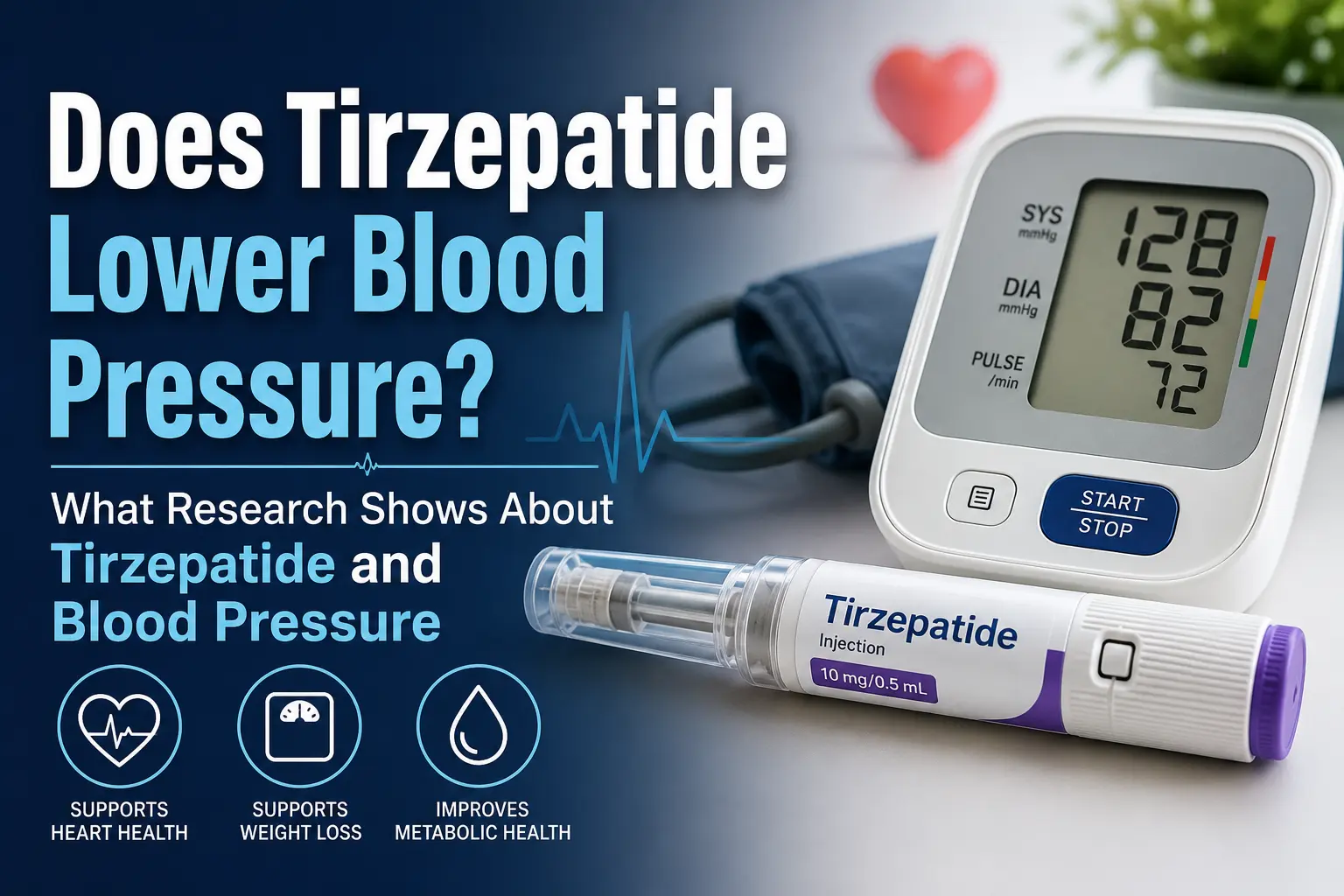
If you have high blood pressure and are considering tirzepatide for weight loss, you may be wondering whether the medication can also improve your cardiovascular health.
It’s a common question because obesity, insulin resistance, type 2 diabetes, and hypertension often occur together.
Research suggests that tirzepatide can lower blood pressure in many people, particularly those who are overweight or obese.
Clinical studies have found reductions in both systolic and diastolic blood pressure among patients taking tirzepatide, with much of the benefit occurring alongside significant weight loss.
While tirzepatide is not prescribed specifically to treat hypertension, improving body weight and metabolic health can have a meaningful impact on blood pressure levels over time.
SEE HOW TIRZEPATIDE CAN HELP YOU
Does Tirzepatide Lower Blood Pressure? Quick Answer
Yes, tirzepatide can lower blood pressure in many individuals.
Clinical trials have shown average reductions in systolic blood pressure ranging from approximately 7 to 11 mmHg, depending on dosage, starting blood pressure, and individual response.
Researchers believe these improvements are largely related to weight loss, improved insulin sensitivity, and overall cardiometabolic health improvements.
For people who have obesity and hypertension, tirzepatide may provide blood pressure benefits in addition to helping with weight management.
Key Takeaways About Tirzepatide and Blood Pressure
| Question | Short Answer |
| Does tirzepatide lower blood pressure? | Yes, many patients experience lower blood pressure during treatment. |
| How much can it lower blood pressure? | Studies have reported average systolic reductions of roughly 7–11 mmHg. |
| Is tirzepatide a blood pressure medication? | No, it is not approved specifically for treating hypertension. |
| Can it cause low blood pressure? | In some cases, particularly when combined with blood pressure medications or significant weight loss. |
| Should you stop blood pressure medication? | No. Always consult your healthcare provider before making changes. |
What Is Blood Pressure and Why Does It Matter?
Blood pressure is the force of blood pushing against the walls of your arteries as your heart pumps blood throughout your body.
A blood pressure reading consists of two numbers:
- Systolic blood pressure (top number), which measures pressure when the heart contracts.
- Diastolic blood pressure (bottom number), which measures pressure between heartbeats.
Healthy blood pressure is generally considered less than 120/80 mmHg.
When blood pressure remains elevated over time, it increases the risk of:
- Heart attack
- Stroke
- Heart failure
- Kidney disease
- Vision problems
Because high blood pressure often develops without obvious symptoms, many people may not realize they have it until complications arise.
How Much Can Tirzepatide Lower Blood Pressure?
One of the most common questions patients ask is how much improvement they can realistically expect.
Research involving adults with obesity found meaningful reductions in blood pressure during tirzepatide treatment.
Average Blood Pressure Reductions Seen in Studies
| Tirzepatide Dose | Average Systolic Blood Pressure Reduction |
| 5 mg | Approximately 7 mmHg |
| 10 mg | Approximately 10 mmHg |
| 15 mg | Approximately 8–11 mmHg |
These improvements may seem small, but they can have important cardiovascular implications.
Even modest reductions in systolic blood pressure have been associated with lower risks of stroke, heart attack, and other cardiovascular complications.
Why Does Tirzepatide Lower Blood Pressure?
Researchers believe several mechanisms contribute to tirzepatide blood pressure reduction.
Weight Loss
Weight loss appears to be the primary driver.
Excess body weight increases strain on the cardiovascular system.
As body weight decreases, blood vessels often function more efficiently and the heart does not need to work as hard to circulate blood throughout the body.
Many patients lose a substantial amount of weight while taking tirzepatide, which may help explain the observed blood pressure improvements.
Improved Insulin Sensitivity
Insulin resistance is associated with both obesity and hypertension.
By improving insulin sensitivity and glucose regulation, tirzepatide may help reduce metabolic stress that contributes to elevated blood pressure.
Reduced Inflammation
Excess body fat can promote chronic inflammation throughout the body.
Weight loss and improved metabolic health may reduce inflammation, helping support healthier blood vessel function.
Better Vascular Function
Emerging research suggests tirzepatide may have positive effects on blood vessel health beyond weight loss alone.
Healthier arteries can better regulate blood flow, potentially contributing to improved blood pressure control.
What Clinical Studies Say About Tirzepatide and Blood Pressure
Several major clinical trials have evaluated the relationship between tirzepatide and blood pressure.
Researchers observed consistent blood pressure reductions among adults with obesity and type 2 diabetes.
One study using 24-hour ambulatory blood pressure monitoring found significant reductions in systolic blood pressure compared to placebo.
Another important finding was that participants with higher starting blood pressure often experienced greater reductions.
Researchers also found that blood pressure improvements continued as weight loss progressed, suggesting a strong connection between weight reduction and cardiovascular benefits.
Overall, current evidence supports the conclusion that tirzepatide can lower blood pressure in many individuals, particularly those carrying excess weight.
SEE IF TIRZEPATIDE IS RIGHT FOR YOU
How Long Does It Take for Tirzepatide to Lower Blood Pressure?
Blood pressure changes typically do not happen immediately.
Most patients begin experiencing metabolic improvements within the first several weeks, but meaningful blood pressure reductions usually develop gradually.
General Timeline
| Time on Tirzepatide | Potential Blood Pressure Changes |
| Weeks 1–4 | Minimal or modest changes |
| Months 1–3 | Early improvements may become noticeable |
| Months 3–6 | Significant weight loss often leads to measurable reductions |
| 6+ Months | Continued improvements may occur as weight loss stabilizes |
Individual results vary depending on starting weight, blood pressure levels, lifestyle habits, and overall health.
Can Tirzepatide Help People With Hypertension?
Many people searching for information about tirzepatide hypertension want to know whether the medication can help manage high blood pressure.
While tirzepatide is not approved as a treatment for hypertension, many patients with obesity-related high blood pressure experience improvements during treatment.
This is important because obesity is one of the leading contributors to hypertension.
By addressing excess weight and improving metabolic health, tirzepatide may help reduce one of the root causes of elevated blood pressure.
For some patients, healthcare providers may eventually adjust blood pressure medications as health markers improve.
However, medication changes should only be made under medical supervision.
Does Tirzepatide Affect Heart Rate?
Some studies have observed small increases in resting heart rate among patients taking tirzepatide.
The increase is generally modest and is not considered dangerous for most healthy individuals.
However, patients with existing cardiovascular conditions should discuss any concerns with their healthcare provider.
Researchers continue to study how these heart rate changes relate to the overall cardiovascular benefits associated with tirzepatide.
Can Tirzepatide Cause Low Blood Pressure?
Although less common than blood pressure reductions in people with hypertension, low blood pressure can occur.
This is more likely if you:
- Already have normal blood pressure
- Take blood pressure medications
- Become dehydrated
- Lose weight rapidly
- Have underlying cardiovascular conditions
Symptoms of low blood pressure may include:
- Dizziness
- Lightheadedness
- Weakness
- Fatigue
- Blurred vision
- Feeling faint
If you experience these symptoms, contact your healthcare provider.
Tirzepatide vs Traditional Blood Pressure Medications
Tirzepatide and blood pressure medications work differently.
Traditional blood pressure medications are designed specifically to lower blood pressure through mechanisms that affect blood vessels, fluid balance, or heart function.
Tirzepatide works primarily by improving metabolic health and supporting weight loss.
Any blood pressure improvements are generally considered secondary benefits.
For this reason, tirzepatide should not replace prescribed hypertension medications unless a healthcare provider determines it is appropriate.
Should You Stop Blood Pressure Medication While Taking Tirzepatide?
No.
Patients should never stop taking prescribed blood pressure medications without guidance from a healthcare provider.
Because tirzepatide blood pressure improvements may occur gradually, ongoing monitoring is important to determine whether medication adjustments are appropriate.
Some patients may ultimately require lower doses, while others may continue their existing treatment plan.
Who May Experience the Greatest Blood Pressure Improvements?
Research suggests the largest improvements often occur in individuals who:
- Have obesity
- Have hypertension before starting treatment
- Lose a substantial amount of weight
- Have insulin resistance
- Have metabolic syndrome
- Improve their nutrition and exercise habits
People with higher baseline blood pressure readings generally experience greater reductions than those whose blood pressure is already within a healthy range.
Other Heart Health Benefits Associated With Tirzepatide
Blood pressure reduction is only one of several cardiovascular benefits associated with tirzepatide.
Significant Weight Loss
Weight reduction may decrease strain on the heart and improve cardiovascular function.
Improved Blood Sugar Control
Better glucose management supports overall cardiovascular health and may reduce long-term complications.
Improved Cholesterol Levels
Studies have shown improvements in triglycerides and certain cholesterol markers among many patients.
Better Cardiometabolic Health
Addressing multiple risk factors simultaneously may help reduce overall cardiovascular risk.
When Should You Talk to a Healthcare Provider?
You should speak with a healthcare provider if you:
- Have high blood pressure and are considering tirzepatide
- Currently take blood pressure medication
- Experience dizziness or symptoms of low blood pressure
- Notice significant changes in blood pressure readings
- Have concerns about your heart health
Regular monitoring can help ensure safe and effective treatment.
Final Thoughts: Does Tirzepatide Lower Blood Pressure
Current evidence suggests that tirzepatide can lower blood pressure in many people, especially those with obesity, insulin resistance, or hypertension.
Clinical studies have demonstrated meaningful reductions in systolic and diastolic blood pressure, often alongside substantial weight loss and improvements in metabolic health.
Although tirzepatide is not a dedicated blood pressure medication, its effects on body weight, insulin sensitivity, and overall cardiometabolic health may contribute to healthier blood pressure levels over time.
For individuals managing both excess weight and high blood pressure, tirzepatide may offer benefits that extend beyond weight loss alone.
Working closely with a qualified healthcare provider can help determine whether treatment is appropriate and ensure blood pressure is monitored throughout the process.
FAQs
Does tirzepatide lower blood pressure?
Yes, research suggests tirzepatide can lower blood pressure in many people, particularly those with obesity, excess weight, or hypertension. Clinical studies have shown reductions in both systolic and diastolic blood pressure, often alongside significant weight loss and improved metabolic health.
How much can tirzepatide lower blood pressure?
The amount varies from person to person, but studies have reported average systolic blood pressure reductions of approximately 7 to 11 mmHg. People who lose more weight or have higher blood pressure before starting treatment may experience greater improvements.
Does tirzepatide help with hypertension?
Tirzepatide is not specifically approved to treat hypertension, but it may help improve blood pressure levels in people who have obesity-related high blood pressure. Weight loss and better insulin sensitivity can reduce strain on the cardiovascular system and support healthier blood pressure readings.
How long does it take for tirzepatide to lower blood pressure?
Most people do not see immediate blood pressure changes. Improvements typically occur gradually over several weeks to months as weight loss and metabolic changes develop. Significant reductions are often seen after three to six months of treatment.
Can tirzepatide cause low blood pressure?
Yes, although it is less common. Low blood pressure may occur in people who already have normal blood pressure, take blood pressure medications, become dehydrated, or experience rapid weight loss. Symptoms can include dizziness, lightheadedness, fatigue, and fainting.
Should I stop taking blood pressure medication while on tirzepatide?
No. You should never stop taking prescribed blood pressure medication without guidance from your healthcare provider. As your blood pressure improves, your provider can determine whether medication adjustments are appropriate.
Can tirzepatide improve heart health?
Tirzepatide may provide several heart health benefits beyond weight loss. Studies have shown improvements in blood pressure, blood sugar control, cholesterol levels, and other cardiometabolic risk factors that are linked to cardiovascular disease.
Who is most likely to see blood pressure improvements on tirzepatide?
People with obesity, hypertension, insulin resistance, or metabolic syndrome often experience the greatest blood pressure improvements. Those with higher blood pressure levels before starting treatment may also see larger reductions than individuals whose blood pressure is already within a healthy range.